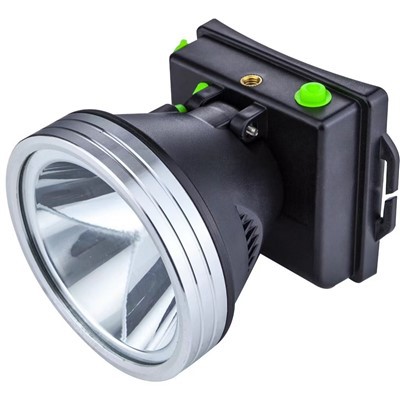
In the realm of high - power lighting solutions, high - power LED searchlights have emerged as a game - changer. These devices are widely used in various fields such as security, search and rescue, and outdoor events. One of the crucial technical parameters that we, as a high - power LED searchlight supplier, often discuss with our clients is the power factor.
Understanding the Power Factor
The power factor is a measure of how effectively electrical power is being used in an electrical circuit. In simple terms, it is the ratio of the real power (measured in watts, which is the power that actually does useful work) to the apparent power (measured in volt - amperes). Mathematically, it is expressed as:
Power Factor (PF)=Real Power (P)/Apparent Power (S)


The real power is the power that is converted into useful work, like producing light in the case of an LED searchlight. The apparent power, on the other hand, is the product of the voltage and current in the circuit. A power factor of 1 (or 100%) indicates that all the electrical power supplied to the device is being used effectively, with no power being wasted. However, in real - world scenarios, the power factor is often less than 1.
Why is the Power Factor Important for High - Power LED Searchlights?
Energy Efficiency
High - power LED searchlights consume a significant amount of electrical energy. A low power factor means that a portion of the electrical power is being wasted. This not only increases the energy consumption but also leads to higher electricity bills. For large - scale applications where multiple searchlights are used, such as in a large - area security setup, the cumulative effect of a low power factor can be substantial. As a supplier, we are committed to providing products with high power factors to help our customers save on energy costs.
Grid Impact
When a large number of electrical devices with low power factors are connected to the power grid, it can cause problems for the grid. Low - power - factor devices draw more current than necessary for the amount of real power they consume. This can lead to increased losses in the transmission and distribution lines, as well as potential voltage drops. Utilities may also impose penalties on consumers with low - power - factor loads. By offering high - power LED searchlights with high power factors, we are helping our customers to be more grid - friendly.
Device Performance
A high power factor can also contribute to the overall performance and lifespan of the LED searchlight. When the power factor is high, the electrical components in the searchlight are subjected to less stress. This can reduce the likelihood of component failures and extend the operational life of the device.
Factors Affecting the Power Factor of High - Power LED Searchlights
Driver Design
The driver is a critical component in an LED searchlight. It is responsible for converting the incoming electrical power into the appropriate form for the LEDs. A well - designed driver can significantly improve the power factor. Modern LED drivers often incorporate power - factor correction (PFC) circuits. These circuits adjust the current waveform to be in phase with the voltage waveform, thereby increasing the power factor. At our company, we invest in research and development to ensure that our LED searchlights are equipped with high - quality drivers with excellent PFC capabilities.
LED Characteristics
The electrical characteristics of the LEDs themselves can also affect the power factor. LEDs are non - linear devices, which means that their current - voltage relationship is not a straight line. This non - linearity can cause harmonics in the electrical current, which in turn can lower the power factor. However, by carefully selecting the LEDs and optimizing the circuit design, we can minimize the impact of these non - linearities on the power factor.
Load Conditions
The power factor of a high - power LED searchlight can also be influenced by the load conditions. For example, if the searchlight is operating at a lower than rated power, the power factor may change. Our products are designed to maintain a relatively stable power factor over a wide range of operating conditions.
Measuring the Power Factor of High - Power LED Searchlights
There are several methods to measure the power factor of a high - power LED searchlight. One common method is to use a power analyzer. A power analyzer can measure the real power, apparent power, and power factor simultaneously. It provides accurate and detailed information about the electrical performance of the searchlight.
When testing our products, we use state - of - the - art power analyzers to ensure that our high - power LED searchlights meet the highest standards of power factor performance. We also conduct tests under different operating conditions to ensure that the power factor remains stable.
Our Product Offerings
As a leading supplier of high - power LED searchlights, we offer a wide range of products with excellent power factor performance. Our Powerful LED Spotlight is designed for high - intensity lighting applications. It features a high - efficiency driver with advanced PFC technology, ensuring a high power factor and energy - efficient operation.
Our Super Bright Handheld Spotlight is perfect for portable applications. Despite its compact size, it offers a high power factor, making it an ideal choice for users who are concerned about energy consumption.
For outdoor use, our Waterproof Handheld Spotlight is a great option. It is not only waterproof but also has a high power factor, ensuring reliable and efficient performance in harsh environments.
Conclusion
The power factor of a high - power LED searchlight is a crucial parameter that affects energy efficiency, grid impact, and device performance. As a supplier, we are dedicated to providing high - quality products with excellent power factor performance. Our range of high - power LED searchlights is designed to meet the diverse needs of our customers, whether they are for security, search and rescue, or outdoor events.
If you are interested in our high - power LED searchlights and would like to discuss your specific requirements, we encourage you to contact us for a detailed procurement discussion. We are committed to providing you with the best lighting solutions and excellent customer service.
References
- Chapman, S. J. (2012). Electric Machinery Fundamentals. McGraw - Hill Education.
- Millman, J., & Halkias, C. C. (1972). Integrated Electronics: Analog and Digital Circuits and Systems. McGraw - Hill.